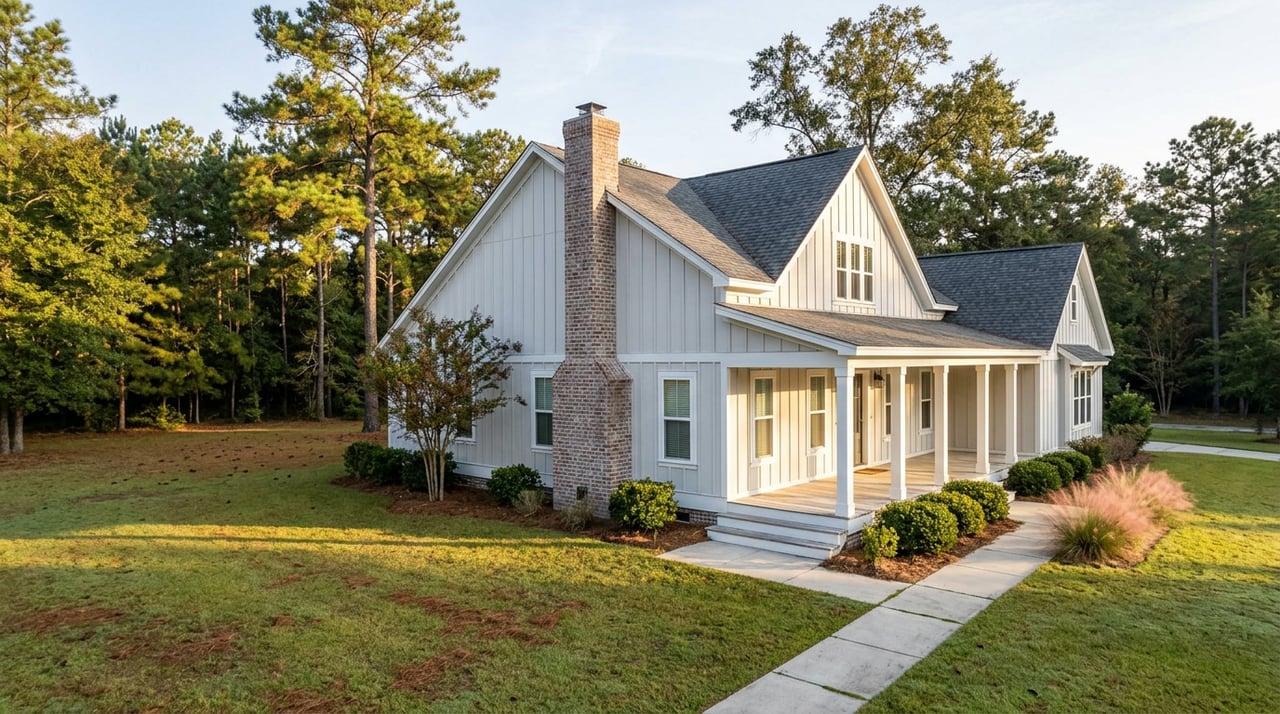
Bastrop's $25 Airbnb Fee Sounds Simple. In Tahitian Village, It Isn't.
September 24, 2026
September 24, 2026
Bastrop set its short-term rental registration fee at $25 a year, on purpose, to be the easiest ordinance in the region to comply with. As Community Impact reported, city leaders compared it directly to Austin's proposed fee of roughly $800 and called the difference a feature, not an oversight. The $25 fee and the ordinance behind it, however, only apply to properties inside Bastrop's city limits. In Tahitian Village, the neighborhood most likely to attract a buyer thinking about Airbnb income in the first place, that single fact splits the subdivision in two.
If you're comparing Bastrop to other Central Texas markets for a lifestyle lot or a river cabin with rental potential, the number that matters isn't the fee. It's which side of an invisible line your parcel sits on, because that can determine whether the STR registration fee applies and which city rules may reach your parcel.
Bastrop's first-ever short-term rental ordinance moved through two public town halls in January 2025 before the city council approved it that February. The mechanics are straightforward: each short-term rental property registers with the city for $25 per unit, per year, and owners with more than one rentable structure on a property file a separate application for each one. City Manager Sylvia Carrillo-Trevino framed the goal as a headcount more than a crackdown, telling council the city simply wanted to know "who's here, who's in our midst, who may need help," and whether those owners were paying their Hotel Occupancy Tax.
Council member Cynthia Meyer made the Austin comparison explicit during the February 12 meeting, noting Austin's proposed registration fee ran close to $800 and calling Bastrop's $25 "much more friendly to everyone." That framing matters for anyone budgeting an STR purchase: the entry cost of doing this by the book in Bastrop is close to nothing.
What it doesn't tell you is how many people had actually complied by the time enforcement started. Existing owners had until April 26, 2025 to register, and as of April 29 of that year, only 14 had done so. That's not a market with years of registered STR history behind it. The ordinance is still shy of its second full year on the books, which means any "Bastrop STR income" figure you see quoted is describing a market in the ordinance's early years.
The pull is real. Data from short-term rental analytics site Rabbu, cited by Visit Bastrop's director of marketing in reporting on the ordinance, shows Bastrop STR owners generating more revenue annually than owners in surrounding areas. Thirty-five percent of the city's Hotel Occupancy Tax revenue flows to Visit Bastrop for tourism marketing.
Tahitian Village is where that revenue story and the physical inventory line up. It's Bastrop's largest established neighborhood, with more than 7,000 platted lots and roughly 1,600 homes built to date along the Colorado River in the Lost Pines. Water service and road maintenance in the community run through Bastrop County Water Control and Improvement District #2 rather than a conventional homeowners association, and a property owners association handles architectural review without collecting dues. With thousands of platted lots still unbuilt, this is exactly the kind of neighborhood where a buyer might reasonably plan a spec cabin around short-term rental income before ever breaking ground.
That's precisely where the jurisdictional question needs to get answered first, not last.
Texas cities carry regulatory reach beyond their official boundaries into what state law calls extraterritorial jurisdiction, or ETJ. Under Chapter 42 of the Texas Local Government Code, the size of that reach is tied to a city's population, and it can extend from a half mile up to five miles past the corporate line. Inside the ETJ, a city typically retains authority over subdivision platting but not full zoning or building-code enforcement, a distinction the Texas Supreme Court reinforced when it held that general-law cities cannot extend building codes into their ETJ.
Tahitian Village sits across that line. Some of its parcels fall inside Bastrop's official city limits. Others sit in the ETJ, in unincorporated Bastrop County, where the 2025 STR registration ordinance, built and enforced as a city ordinance, does not currently apply. Two river-adjacent cabins on the same road can be subject to entirely different rulebooks purely because of which side of a boundary drawn on a city GIS map they happen to sit on.
Here's how that split plays out in practice:
| Inside Bastrop city limits | In the ETJ (unincorporated county) | |
|---|---|---|
| STR registration required | Yes, $25 per unit annually | Not currently required under the city's 2025 ordinance |
| Hotel Occupancy Tax | Applies | Applies |
| Zoning enforcement | Falls under the new Bastrop Development Code | City zoning generally does not reach; county rules apply, though some Development Code provisions may also apply |
| Typical utility/road provider in Tahitian Village | City of Bastrop service in some sections | Bastrop County WCID #2 in others |
None of this is visible on a standard listing photo, and a section's utility provider is a clue worth asking about, not a guarantee of jurisdiction on its own. The only reliable way to know which column applies to a specific lot is to request a boundary determination from the city or confirm it through the county appraisal district before writing an offer built around rental income projections.
If the city-limits-versus-ETJ split were the whole story, it would already be reason enough to check before buying. Earlier this year, Bastrop made the picture more complicated, not less.
According to Hoodline, on April 14, 2026, the Bastrop City Council voted to repeal the city's old B3 form-based code and adopt a new Bastrop Development Code, now codified as Chapter 14 of the city's ordinances. Mayor Pro Tem John Kirkland called the vote the final step in retiring B3, and the new code replaces B3's place-type system with a more conventional zoning structure built around named districts.
A detail from the revisions that led up to that vote is relevant here: during a December 2025 presentation to council, city planning staff confirmed, as Community Impact reported, that the second draft of the new code removed short-term rentals from zoning-district regulation entirely. In plain terms, the second draft removed STRs from zoning-district regulation; whether that change remained in the adopted code is unclear. If it did, that would be a loosening on the zoning side.
At the same time, Citizen Portal reported that the draft introduced new language capping the number of residents allowed in a dwelling, an occupant-load approach that the city attorney told planning commissioners was chosen specifically because defining "family" for zoning purposes raised constitutional risk. Commissioners asked staff to revisit that language before final adoption. Whether the version that passed on April 14 changed materially from the draft debated in March isn't something the public reporting on the vote confirms, which means anyone weighing occupancy limits on a Tahitian Village rental should pull the current Chapter 14 text directly rather than rely on the draft-stage summary.
There's one more wrinkle worth flagging plainly. The new Development Code states its own purpose is to establish standards "within the City of Bastrop and its extraterritorial jurisdiction," language that reaches further than the 2025 STR registration ordinance ever did. That's a planning-framework purpose clause, not necessarily an expansion of who owes the $25 fee. A buyer should ask the city to clarify in writing how the clause applies rather than assume one way or the other.
Before treating any Tahitian Village or greater Bastrop lot as a short-term rental play, it's worth working through a short list with the city and county directly:
Does the $25 STR fee apply to every home in Tahitian Village? No. The fee applies to properties inside Bastrop's official city limits. Parcels in the ETJ are not currently covered by the city's 2025 registration ordinance.
Does the new Development Code change whether I can operate a short-term rental? The second draft removed STRs from zoning-district restrictions, but whether that change remained in the adopted code is unclear. It does not appear to replace the separate registration and tax ordinance, which is a different piece of the city code.
How do I find out which side of the line my lot is on? Ask Bastrop's Development Services department for a jurisdiction or boundary determination on the specific address, or confirm through the Bastrop Central Appraisal District. Don't rely on a neighborhood name or a listing description to answer this.
If you're weighing a lot in Tahitian Village or anywhere else in Bastrop County with rental income in mind, it's worth walking the jurisdiction question through before you write an offer, not after. Kaili Cox can help you check where a specific parcel actually sits and what that means for your plans, starting with a free home valuation.
This article is general information, not legal, tax or financial advice. Consult a qualified professional about your situation.
Stay up to date on the latest real estate trends.



Get assistance in determining current property value, crafting a competitive offer, writing and negotiating a contract, and much more. Let me guide you through your home-buying journey.

Pine Tree Realty Group
10222 Pecan Park Blvd Ste. 10 Austin, TX 78729