East Austin's New Historic Survey Isn't the Risk. This Permit Rule Already Was.
September 3, 2026
September 3, 2026
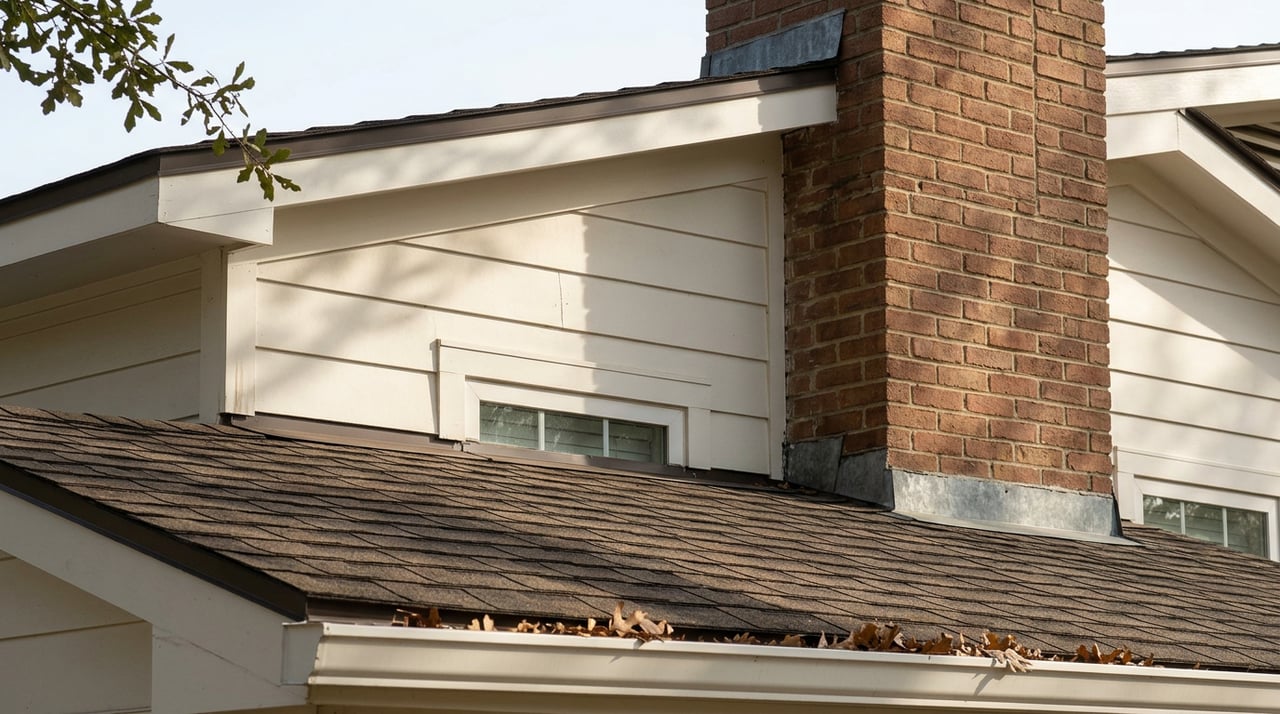
Picture a 1978 frame cottage a few blocks off Rosewood Avenue, board-and-batten siding, a low-pitched roof that's due for a reroof before the next hard freeze. The seller wants it looking sharp for photos. The permit gets submitted for what should be a routine exterior job. Then the timeline slips, not because anything is wrong with the house, but because the application got routed somewhere the seller never expected: Austin's Historic Preservation Office.
That routing has nothing to do with a headline you may have seen this summer about the city surveying East Austin's history. It happens because the house is old enough to trigger a review that has been running quietly for years, survey or no survey.
In June 2026, Austin Planning's Historic Preservation Office launched an update to a decade-old survey of the area east of I-35, this time bounded by Manor Road to the north, Lady Bird Lake to the south, and Airport Boulevard to the east. The consultant on the job is Austin-based HHM & Associates, and the project is being run out of the same office that oversaw a similar survey of downtown, completed in 2024. Division Manager Kim McKnight and planner Sofia Wagner have both spoken publicly about the goal: document buildings, oral histories, and community stories before they disappear under redevelopment pressure, with a final report due in 2028.
Here's the part that matters most for anyone with a closing date or a contractor on standby: the city has been explicit that this is a planning tool only. It does not rezone anything, does not change land use, and does not adjust property taxes. It focuses on properties built before 1983, since those are approaching the 50-year mark that lets a building begin the formal process toward historic designation. Nothing about the survey itself forces a designation on any single address.
So if the survey isn't the mechanism creating friction on your renovation or your closing timeline, what is?
Austin's Historic Preservation Office reviews exterior changes to any building 45 years or older, whether or not that building has ever been formally designated as historic. According to the city's own guidance, if you apply for a permit on a building that age, you don't take any extra step. Your application is simply routed internally for review, automatically, as part of the standard process.
That means a home built in 1980 has been subject to this review since roughly 2025, a full year before the East Austin survey relaunched. A home built in 1983, the survey's cutoff year, will age into that same review window in 2028, right around when the survey wraps. The 45-year rule is the actual gatekeeper on your reroof, your window swap, your porch rebuild. The survey is a research project layered on top of a system that was already running.
Not every pre-1983 East Austin address faces the same friction. The level of review depends on whether a property sits in one of three tiers.
| Status | What triggers review | What it means for your permit |
|---|---|---|
| Not formally designated, 45+ years old | Automatic internal routing on any exterior permit application | No extra paperwork from you, but your timeline can extend while staff review |
| Commercial NCCD, like the East 11th & 12th Street Neighborhood Conservation Combining District | Zoning overlay tied to the corridor's history as a significant African American commercial district | Design, signage, and height rules apply on top of base zoning, mainly for commercial and mixed-use projects |
| Locally designated historic district, like Robertson/Stuart & Mair or Rogers Washington Holy Cross | Formal City Council designation following a Historic Landmark Commission review | A Certificate of Appropriateness must be granted before any exterior permit is issued for a contributing structure |
Robertson/Stuart & Mair, whose earliest building is the French Legation from 1840, contains 123 principal buildings, 85 of which retain enough historic integrity to count as contributing. Rogers Washington Holy Cross, a Ranch-style residential district developed by Black professionals for Black professionals starting mid-century, holds 55 properties with 47 contributing. Both districts require that Certificate of Appropriateness before an owner can touch an exterior feature. That's the heaviest tier. Most pre-1983 East Austin homes sit in the lightest tier, the automatic 45-year routing, which adds review time but not a formal approval gate.
The survey's final report isn't due until 2028, which might suggest owners have breathing room. They don't, not entirely. The 45-year review applies today to any qualifying address, independent of whether the survey has finished collecting data. A house doesn't need to appear in a completed report to get routed through Historic Preservation on its next exterior permit.
What the survey does add, over its two-year run, is documentation. As HHM & Associates completes fieldwork and archival research block by block, specific properties and blocks could accumulate exactly the kind of record that supports a future landmark or district application, the same process that produced Robertson/Stuart & Mair and Rogers Washington Holy Cross in the first place. That doesn't happen automatically and it doesn't happen to every address. But it means the population of formally designated East Austin properties, and the population of homes carrying that heavier Certificate of Appropriateness requirement, is more likely to grow over the next two years than to stay flat.
The years that make a house old enough for historic review are the same years that put it up against Central Texas soil and plumbing realities. Austin's eastern half sits on Blackland Prairie clay, a high-plasticity soil that expands when saturated and shrinks hard during the region's dry summers. That shrink-swell cycle is the primary driver of foundation movement across Central Texas, and homes built before 1990 east of MoPac, including pre-code construction in East Austin, carry documented higher exposure to it. Slab homes from the 1950s through the 1980s are also the era most likely to still have cast iron drain lines under the foundation, a common finding on inspections of houses this age.
Texas law requires sellers to disclose known foundation repairs on the TREC Seller's Disclosure Notice, so a buyer touring one of these homes should expect that question to come up directly, and should ask when any prior repair happened and whether its warranty transfers. In the current market, that conversation carries real weight. Austin was running around 89 average days on market with more than 12,000 active listings as of mid-2026, conditions that give buyers room to negotiate repair credits or price adjustments when a foundation or plumbing issue turns up during an inspection.
Put together, a pre-1983 East Austin home asks for diligence twice over. Once on the permit side, where its age alone can route an exterior project through an extra layer of city review. Once on the inspection side, where the same age signals a higher chance of foundation movement or aging drain lines that a buyer will want documented before closing.
Does the East Austin Historic Resource Survey change my zoning or my property taxes? No. The city has stated directly that the survey is a planning tool only. It does not include zoning changes, land use changes, or property tax adjustments.
Does my house need to be formally designated as historic for the 45-year review to apply? No. The review applies to any building 45 years or older, regardless of designation status. It happens automatically when you submit an exterior permit application.
How long until the survey could affect my specific block? The survey runs through 2028. Any documentation it produces could eventually support a future landmark or district application, but that's a separate, longer process from the automatic review that already applies today.
A pre-1983 East Austin home is a genuinely good asset. It's also one that asks a buyer or seller to do homework in two directions at once, permit history and physical condition, before a timeline gets set. If you're weighing a renovation, a listing, or an offer on one of these properties and want a clear read on what your specific address is facing, request a free home valuation from KC Realty. Kaili knows this corridor block by block, and she'd rather you find out about a permit routing or a foundation question from her than from a contractor mid-project.
Stay up to date on the latest real estate trends.



Get assistance in determining current property value, crafting a competitive offer, writing and negotiating a contract, and much more. Let me guide you through your home-buying journey.

Pine Tree Realty Group
10222 Pecan Park Blvd Ste. 10 Austin, TX 78729