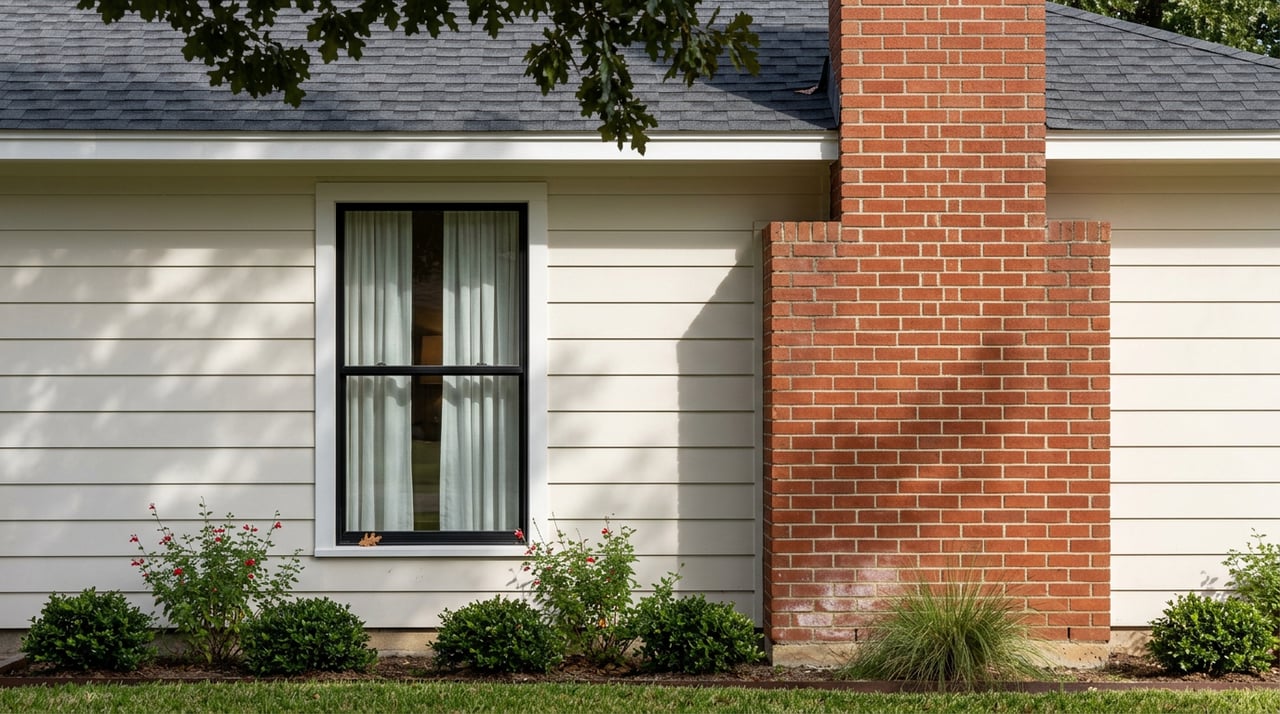
Bastrop Housing Market 2026 and the Timing Gap
July 23, 2026
July 23, 2026
Headlines this spring have been unkind to Bastrop County. Median sale prices fell about 8.3% year over year in March 2026 to roughly $330,000, one of the steepest drops in the Austin metro. Read on its own, that number sounds like a market in retreat.
Read against the employer pipeline forming a few miles away, it looks like something else entirely: a timing gap. Homes are being finished faster than the jobs that will eventually fill them are being staffed. For a buyer paying attention, that gap is the story worth understanding before comparing Bastrop to Kyle, Elgin, or Manor on a portal.
The March reading came from Unlock MLS data reported by the Austin Business Journal and cited by The Real Deal, which noted that the housing market has shown signs of cooling, with median home prices in Bastrop County falling 8.3 percent year-over-year in March to about $330,000, one of the steepest declines in the Austin metro. Metro-wide, the softening is milder. Months of Inventory for the Austin area sat at 6.04 months for 2026 versus 6.31 a year earlier, a modest tightening consistent with pending sales growth, and outer-ring suburbs are where the buyer leverage is concentrated.
So Bastrop is cooling faster than the metro. Why? The answer is not weakening demand. It's the arrival curve of new supply meeting a demand curve that hasn't hired yet.
The median is a midpoint, not a shopping list. In today's Bastrop market, the mid-$300s to mid-$400s band is where the new construction pipeline is being aimed. The Stonebrush master plan, a 253-acre project the 360 Company is entitling just north of downtown between Smith Road and Sayers Road, is a good tell. The project will target the middle of the market, with 40- to 50-foot wide lots and home prices expected in the mid-$300,000s to mid-$400,000s.
Translate that for a buyer:
If your budget lands in that middle band, the softer median is not academic. It's the reason builder incentives are back on the table.
Bastrop's rooftop count is set to jump before the biggest employers finish hiring. A short version of what's actually in motion:
| Project | Scale | Status |
|---|---|---|
| Stonebrush (360 Company) | 253 acres, 817 homes, six-phase buildout with first lots roughly a year after approvals and initial completions projected for 2028 | Entitlements |
| Sendero mixed-use | 75 acres at Hwy 71 and FM 969, ultimately 782 residential units, a hotel, and more than 250,000 sq ft of retail and professional space; next commercial phase set for spring 2026 | Under construction |
| SilverLeaf (MA Partners) | First phase building out | Vertical |
| The Colony | More than 2,000 existing homes, still expanding | Ongoing |
| Casata microhomes | 150-unit rental community | Announced |
| Del Webb amenity center | PulteGroup active adult project, $10M amenity center at 105 Perth Cove expected in 2026 | Under construction |
Stack those against a metro that is already at 2.7 sellers per buyer, classified as balanced overall, though conditions vary widely by city and zip code, with buyers seeing more negotiating room in outer ring suburbs with higher Months of Inventory, and the picture sharpens. Bastrop is one of those outer-ring suburbs, and it is absorbing supply faster than the jobs on the other side of Highway 71 can create households.
Now the other half of the ledger, which the median price cannot see yet.
Read together, the pattern is consistent. Ground broke in 2025 and 2026. Ribbon cuttings and full-strength hiring land in 2027 and 2028. Homes at Stonebrush, by the developer's own timeline, deliver in 2028. The two curves converge, but not this year and not next.
The rules that shape what gets built next changed in the spring. Bastrop residents and developers will see future growth guided by a new set of land-use rules after council members replaced the city's development code and zoning map this spring, and the biggest structural change is the move from B3's place types, which organized land from rural edges to more urban main street blocks based on building form, to a traditional zoning map with named districts such as rural residential, single-family residential, and mixed-use.
For a buyer, that shift matters in two ways. It gives builders more predictable entitlement paths on the categories where the pipeline is heaviest, which supports the mid-market supply already in motion. And it tightens the frame around historic downtown, which is why the independent-restaurant density on Main and College keeps growing while chain rooftops keep going up along the Highway 71 corridor.
The paradox stops being abstract when a contract is on the table. A few practical translations:
Builders are the marginal seller. With Sendero, SilverLeaf, and Stonebrush all chasing buyers in the same band, builder incentives, rate buydowns, and closing cost credits are the real negotiation levers right now. Metro-wide, the divergence between new construction and resale can translate into more negotiating flexibility with resale sellers than with builders, but Bastrop is the exception where builders are willing to move on price to keep absorption moving.
Days on market are longer than the metro average. The Austin area is running at roughly 70 days on market on average with about 52% of active listings undergoing a price drop and a sold-to-list ratio of 97.35%. Bastrop resale sellers priced against 2022 comps are the ones cutting.
The 2028 delivery date is your friend, not your problem. If a household closes on a resale home this year at a softer price, the SpaceX, Line 204, Acutronic, and EdgeConneX ramp-up is happening around them, not to them. That is the arbitrage window a portal median cannot show.
Is Bastrop's price drop a signal to wait? Waiting has a cost. The softest resale pricing tends to appear before the biggest employer ramps, not after them. Once the 2027 and 2028 hiring cycles land, the current 6-months-of-inventory cushion tightens quickly.
How does Bastrop compare to Kyle, Elgin, or Manor for value right now? All four show up as outer-ring suburbs with more buyer leverage. Bastrop is the only one of the group with a named studio lot, a data center corridor, and a SpaceX expansion inside county lines at the same time.
Does the new development code affect what I can build on a lifestyle lot? Yes. Rural residential, single-family residential, and mixed-use are now named districts on a traditional zoning map. Anyone shopping wooded acreage or a lot near the river should confirm the district and any overlays before writing an offer.
The median tells you the market. It does not tell you what your street, your section, or your builder's price sheet will actually do over the next 24 months. If you're weighing Bastrop against another Central Texas suburb, Kaili Cox can walk you through the specific corridor, the specific builder incentives, and the specific resale comps that will decide your number. Request a free home valuation to start the conversation.
Stay up to date on the latest real estate trends.



Get assistance in determining current property value, crafting a competitive offer, writing and negotiating a contract, and much more. Let me guide you through your home-buying journey.

Pine Tree Realty Group
10222 Pecan Park Blvd Ste. 10 Austin, TX 78729